Key Points
- An Amsterdam court has ruled that the city council acted lawfully when extending the operating licence for Fabel Friet, a popular chip shop whose viral TikTok presence generates massive tourist queues in the city centre.
- Local residents and neighborhood campaigners challenged the licence extension, arguing that customer queues stretching toward the canal bridge severely exacerbated overcrowding, littering, and aggressive seagull activity in the Negen Straatjes district.
- Resident Niek van der Heijden testified that the limited public seating available for customers eating fries forces patrons to consume meals on the street, worsening localized congestion.
- The presiding judges concluded that local residents failed to legally demonstrate that neighborhood disturbances were solely or primarily caused by Fabel Friet customers, pointing out that multiple other catering establishments in the vicinity also attract heavy foot traffic and queues.
- Founded in 2020 by Abel Klatzer and Floris Feilzer, the flagship Runstraat outlet achieved viral status through social media videos showcasing artisan fries with exotic toppings like Parmesan cheese and truffle mayonnaise.
- In response to municipal pressures, the business owners instituted a specialized queueing system, hired private security personnel, and even temporarily employed a falconer to deter seagulls from tearing open public waste bags.
Netherland (Amsterdam Times News) November 11, 2026 – A municipal court in the Netherlands has upheld the city council’s decision to extend the operating licence of Fabel Friet, a viral chip shop located in Amsterdam’s historic canal district whose popularity has sparked intense friction with local residents. Rejecting arguments brought forward by neighborhood campaigners who blamed the shop’s social media fame for severe overcrowding and environmental nuisances, the court ruled that objectors failed to prove the establishment was uniquely responsible for local disruptions. The legal resolution marks a significant setback for residents seeking municipal intervention against tourism-driven congestion, while affirming the operational rights of businesses capitalizing on digital platform marketing.
- Key Points
- Why Did Local Residents Challenge the Fabel Friet Licence Extension?
- What Was the Legal Basis for the Court’s Decision to Uphold the Licence?
- How Have the Founders Addressed Neighbourhood Disruptions?
- Background of the Particular Development
- Prediction: How This Development Can Affect Local Businesses and Amsterdam Residents
Why Did Local Residents Challenge the Fabel Friet Licence Extension?
The legal dispute centers upon the intense transformation of the Negen Straatjes (Nine Streets) neighbourhood, where residential quiet has increasingly collided with heavy international tourism fueled by digital platforms.
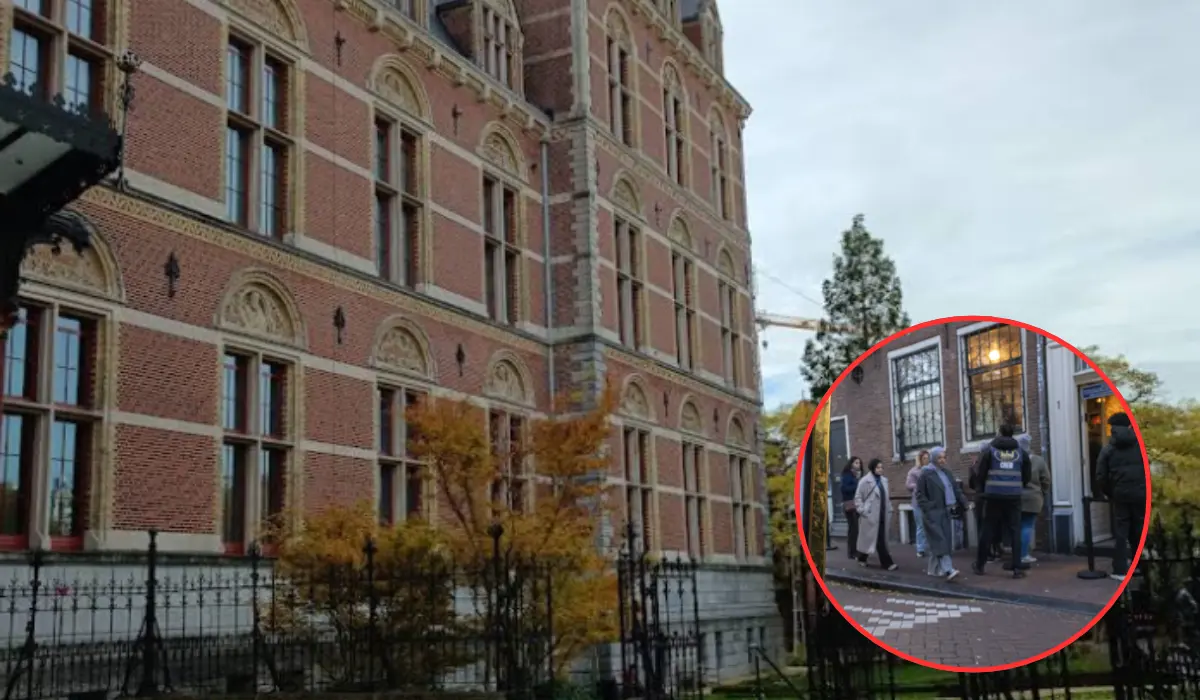
As reported in court filings and local municipal coverage, local campaigners formally challenged the Amsterdam city council’s 2024 decision to extend the operating licence of the Runstraat flagship store. Residents argued that viral videos showcasing the shop’s artisanal french fries with gourmet toppings—such as Parmesan cheese and truffle mayonnaise—draw endless streams of visitors who form queues stretching back to the adjacent canal bridge.
During court proceedings, local resident Niek van der Heijden detailed the daily impact of the crowds on neighbourhood livability. As reported by local judicial correspondents, Niek van der Heijden stated before the court:
“The number of places where they can sit and eat their chips without causing a nuisance is quite limited.”
Residents contended that this spatial limitation forces tourists to consume their food directly on residential doorsteps and bridges, generating extensive littering, blocked pedestrian walkways, and attracting large flocks of scavenging seagulls that tear open rubbish bags left on the pavements.
What Was the Legal Basis for the Court’s Decision to Uphold the Licence?
The administrative court ultimately dismissed the residents’ petition, ruling that the Amsterdam city council exercised proper administrative discretion when granting the licence extension.
In its official press release and judgment, the court noted that the petitioners did not provide sufficient evidentiary proof linking neighborhood degradation exclusively to Fabel Friet. The judicial panel highlighted the commercial density of the surrounding Negen Straatjes district, emphasizing that numerous other food and beverage outlets operate within close proximity and contribute similarly to local pedestrian density.
As outlined in the court’s official statement:
“Other catering outlets in the neighbourhood also attract large numbers of visitors and have queues. The court concludes that it cannot be assumed that the problems experienced are solely or primarily caused by customers of Fabel Friet. The neighbouring residents have not demonstrated this.”
Legal analysts noted that while the ruling addresses the 2024 licence extension, it does not legally evaluate any subsequent permits issued during the current calendar year, leaving open future administrative reviews if municipal tourism policies evolve.
How Have the Founders Addressed Neighbourhood Disruptions?
Fabel Friet was established in 2020 by founders Abel Klatzer and Floris Feilzer. While the entrepreneurs have expanded their enterprise by launching four additional branches across central Amsterdam, the original Runstraat location remains their most prominent storefront.
Faced with mounting complaints from neighbours and municipal authorities regarding public disorder, Klatzer and Feilzer implemented several operational mitigations. To manage crowd control, the proprietors instituted a dedicated, organized queueing system inside and directly outside the storefront, alongside hiring professional private security personnel to maintain order and keep pedestrian thoroughfares clear.
In a notable operational measure to combat the environmental impact of scavenging wildlife, the owners previously hired a professional falconer. The falconer was deployed to deter aggressive seagulls that were tearing open rubbish bags left outside the shop and scattering food waste across the historic street. Despite these private interventions, community friction persisted, culminating in the formal legal challenge adjudicated by the Amsterdam court.
Background of the Particular Development
The tension surrounding Fabel Friet reflects a broader, long-standing urban governance crisis in Amsterdam regarding “overtourism” and the commercialisation of historic residential districts. Over the past decade, the rapid growth of social media platforms like TikTok and Instagram has transformed localized culinary spots into global tourist attractions overnight.
Municipal authorities in Amsterdam have increasingly struggled to balance the economic benefits generated by thriving hospitality and tourism sectors against the quality-of-life concerns voiced by permanent residents in central wards such as the canal ring. Traditional zoning laws and municipal licensing frameworks are frequently tested as businesses adapt to viral marketing models that generate unprecedented customer volumes within confined medieval street layouts.
Prediction: How This Development Can Affect Local Businesses and Amsterdam Residents
The court’s decision to uphold Fabel Friet’s licence carries notable implications for future urban planning, local business operations, and residential advocacy in European tourism hubs.
Impact on Viral Businesses and Municipal Licensing
For businesses operating in high-density tourist areas across Amsterdam, the ruling provides a legal precedent affirming that municipal councils cannot arbitrarily deny or revoke operating licences based on generalized crowd phenomena, provided establishments comply with zoning laws and implement reasonable crowd-control measures. Retailers and food vendors relying on viral social media marketing will likely view the judgment as a layer of protection against direct neighbourhood closure campaigns, provided they maintain private security and sanitation protocols.
Impact on Residential Advocacy and Overtourism Policies
Conversely, for neighbourhood residents and civic action groups, the ruling highlights the strict legal thresholds required to overturn municipal administrative decisions through the courts. Rather than relying on direct legal challenges against individual popular vendors, resident associations are expected to pressure the Amsterdam city council to implement broader systemic regulations, such as tighter tourist capacity caps, restrictions on takeaway food packaging, or stricter commercial zoning limits across the Negen Straatjes district to safeguard residential livability.