Key Points
- Criminal trial opens in Amsterdam: The criminal prosecution against Tata Steel over alleged intentional and unlawful air pollution around its IJmuiden steelworks began at Amsterdam District Court on Friday, November 20, 2026.
- Scope of prosecution claims: The Dutch Public Prosecution Service (OM) accuses Tata Steel IJmuiden of intentionally and unlawfully releasing harmful substances into the air, alleging during the opening hearing that the company intentionally released harmful substances 598 times.
- Origins of the complaint and health findings: The case began in 2021 after lawyer Bénédicte Ficq filed a criminal complaint on behalf of 1,200 local residents. Complainants report serious health issues and soot settling on children’s playgrounds, while the National Institute for Public Health and the Environment (RIVM) has recorded above-average lung cancer rates in the area and estimated that emissions reduce local life expectancy by an average of 2.5 months.
- Focus on coke-making ovens: Prosecutors narrowed their investigation to Tata Steel’s coke-making ovens, where coal is heated at high temperatures without oxygen; incomplete heating leaves raw coke that releases harmful gases and spreads soot.
- Tata Steel’s defence and investigative dispute: Tata Steel maintains that occasional incomplete heating of a batch is technically unavoidable, called the prosecution’s allegations unjust in July, and—through its defence counsel—criticised prosecutors’ use of wiretaps and infiltration of its internal network.
- Potential personal liability for executives: Prosecutors are still assessing whether individual managers can be held personally liable, with an investigation expected to conclude in the early months of next year, while Bénédicte Ficq has called for executives including chairman and chief executive Hans van den Berg to face prosecution.
- €2 billion green steel subsidy extended to March: Negotiations over a €2 billion state support package for Tata Steel’s transition to lower-emission steel production—which the Dutch cabinet warned in July could be withdrawn if the investigation raised serious concerns—have been extended to March 2027, before the trial is expected to conclude.
Netherland (Amsterdam Times News) November 20, 2026 – The criminal trial against Tata Steel over alleged intentional and unlawful air pollution around its IJmuiden plant opened at Amsterdam District Court on Friday, November 20, 2026. Prosecutors from the Dutch Public Prosecution Service (OM) accuse the steelmaker of deliberately releasing harmful substances from its coke-making ovens and failing to report incidents, following a 2021 criminal complaint brought by lawyer Bénédicte Ficq on behalf of 1,200 residents. Tata Steel disputes the accusations as technically unavoidable and unjust, while talks over a €2 billion state subsidy for greener steel production have been extended to March 2027 ahead of the trial’s conclusion.
- Key Points
- Why Is Tata Steel Facing Criminal Charges Over Air Pollution in IJmuiden?
- How Do Tata Steel’s Coke-Making Ovens Relate to the Prosecution’s Case?
- What Has Tata Steel Said in Response to the Allegations and Investigation?
- Will Individual Tata Steel Executives Such as Hans van den Berg Be Prosecuted?
- How Does the Trial Affect Tata Steel’s €2 Billion Green Steel Subsidy?
- Background of the Development
- Prediction: How This Development Could Affect IJmuiden Residents, Tata Steel, and Dutch Industrial Policy
Why Is Tata Steel Facing Criminal Charges Over Air Pollution in IJmuiden?
As reported by DutchNews.nl and NL Times, the criminal case against Tata Steel opened at Amsterdam District Court on Friday, November 20, 2026, with the Public Prosecution Service (OM) accusing Tata Steel IJmuiden of intentionally and unlawfully releasing harmful substances into the air. During the first day of proceedings, prosecutors stated that Tata Steel intentionally released harmful substances into the environment 598 times.
According to coverage by Dutch public broadcaster NOS cited by DutchNews.nl and NL Times, the legal proceedings stem from a criminal complaint filed in 2021 by lawyer Bénédicte Ficq on behalf of 1,200 people living near the IJmuiden plant. Complainants state that they experience serious health problems and have raised alarm over local children as soot accumulates in neighbourhood playgrounds.
Research by the Dutch public health institute RIVM has recorded above-average rates of lung cancer among residents living near the steelworks and concluded that emissions from the plant shorten local residents’ lifespans by an average of 2.5 months.
How Do Tata Steel’s Coke-Making Ovens Relate to the Prosecution’s Case?
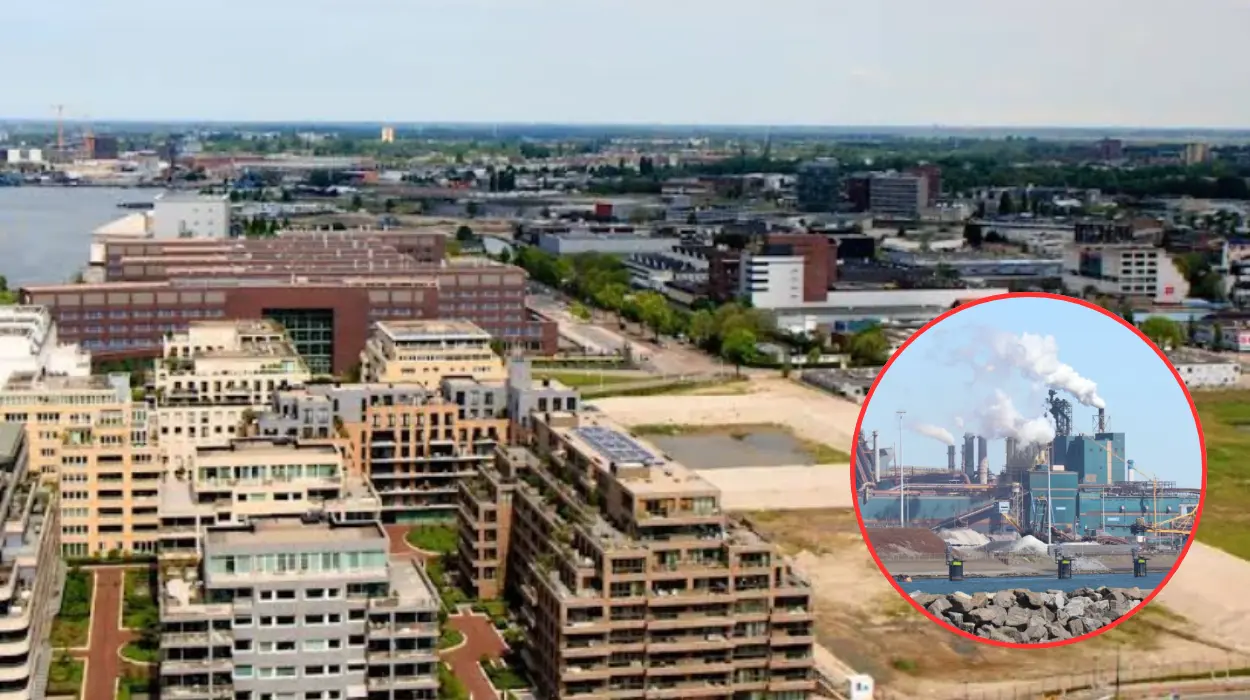
As reported by DutchNews.nl and NL Times, prosecutors focused their investigation specifically on the IJmuiden site’s coke-making ovens rather than examining the entire complex, which spans an area equivalent to 1,500 football pitches and contains 13 individual plants. Inside the coke ovens, coal is heated at very high temperatures without oxygen to manufacture coke, a material essential for steelmaking.
When coal is not heated for a sufficient duration, it remains partly unfinished—known as raw coke—and can emit harmful gases into the atmosphere while spreading soot across the surrounding area. Prosecutors suspect that Tata Steel accepts these incidents and deliberately refrains from reporting them, whereas Bénédicte Ficq and the complainants allege that the company failed to maintain or replace ageing equipment because doing so was financially unattractive ahead of its planned transition to lower-carbon steel.
What Has Tata Steel Said in Response to the Allegations and Investigation?
Tata Steel maintains that it is technically unavoidable for a batch of coal occasionally not to be heated for long enough. When prosecutors announced in July 2026 that they would summon the company to court, Tata Steel described the allegations as fundamentally unjust.
During Friday’s preliminary court hearing, it also emerged—as reported by NU.nl, NOS, and Techzine—that investigators gathered evidence by tapping employees’ telephones and infiltrating Tata Steel’s internal digital network, alongside video recordings, environmental measurements, witness interviews, and seized documents. According to NOS, Tata Steel’s defence counsel strongly criticised those investigative methods during the hearing, contending that wiretapping and network hacking had been used in a suggestive manner.
Will Individual Tata Steel Executives Such as Hans van den Berg Be Prosecuted?
As reported by DutchNews.nl and NL Times, the Public Prosecution Service (OM) has not yet decided whether individual managers at Tata Steel can be held personally liable, with an investigation into executive responsibility expected to conclude in the early months of next year.
Speaking to NOS ahead of the court session, lawyer Bénédicte Ficq described the start of the trial as a major milestone, arguing that the emissions incidents were foreseeable and avoidable and stating that the prosecution recognises the importance of a healthy living environment and demonstrates that pollution causing illness can constitute a crime. Bénédicte Ficq also expressed hope that prosecutors will pursue charges against executives including chairman and chief executive Hans van den Berg, explaining to NOS that her focus is not on Hans van den Berg solely as an individual, but on the principle that corporations breach regulations through decisions taken by people who carry responsibility.
How Does the Trial Affect Tata Steel’s €2 Billion Green Steel Subsidy?
As reported by DutchNews.nl citing NOS, the criminal prosecution also has direct implications for a proposed €2 billion state support package intended to help Tata Steel transition toward greener steel production in IJmuiden. In July 2026, the Dutch cabinet warned that it could withdraw from the support agreement if the criminal investigation raised serious concerns for the state.
According to NOS and industry reporting, negotiations between Tata Steel and the Dutch government over the subsidy package have been extended by five months to March 2027. Because the criminal trial at Amsterdam District Court is unlikely to conclude before that March deadline, policymakers and company negotiators face ongoing uncertainty as parallel legal and financial tracks unfold.
Background of the Development
The criminal trial at Amsterdam District Court follows five years of legal and regulatory scrutiny surrounding emissions from Tata Steel’s IJmuiden steelworks on the North Sea coast. In 2021, criminal defence lawyer Bénédicte Ficq lodged a formal complaint on behalf of 1,200 residents living near the plant, citing persistent soot deposits and health concerns supported by National Institute for Public Health and the Environment (RIVM) findings of elevated lung cancer rates and an average 2.5-month reduction in local life expectancy. The Public Prosecution Service (OM) launched a criminal investigation in 2022—using technical measurements, surveillance, wiretaps, and network infiltration focused on the plant’s coke-making ovens—before announcing in July 2026 that it would prosecute Tata Steel, while leaving open separate decisions on individual executives such as Hans van den Berg and complicating negotiations over a €2 billion Dutch state green steel subsidy.
Prediction: How This Development Could Affect IJmuiden Residents, Tata Steel, and Dutch Industrial Policy
For residents living in communities surrounding the IJmuiden steelworks, the courtroom examination of alleged intentional emissions and public health data provides formal judicial scrutiny of long-standing complaints, though any binding court verdict and potential executive prosecutions will take months to resolve. For Tata Steel Nederland, its leadership including Hans van den Berg, and its workforce, the proceedings create simultaneous legal and financial pressure: the company must defend both its operational practices and challenges to prosecutorial surveillance methods in court while seeking to finalise the €2 billion state-backed decarbonisation agreement by the extended March 2027 deadline without losing government backing. More broadly, the case signals heightened criminal enforcement risk for major industrial operators in the Netherlands whose environmental compliance intersects with public health outcomes and state transition funding.